Finally – a denture experience built around what you deserve, not what the industry settled for.
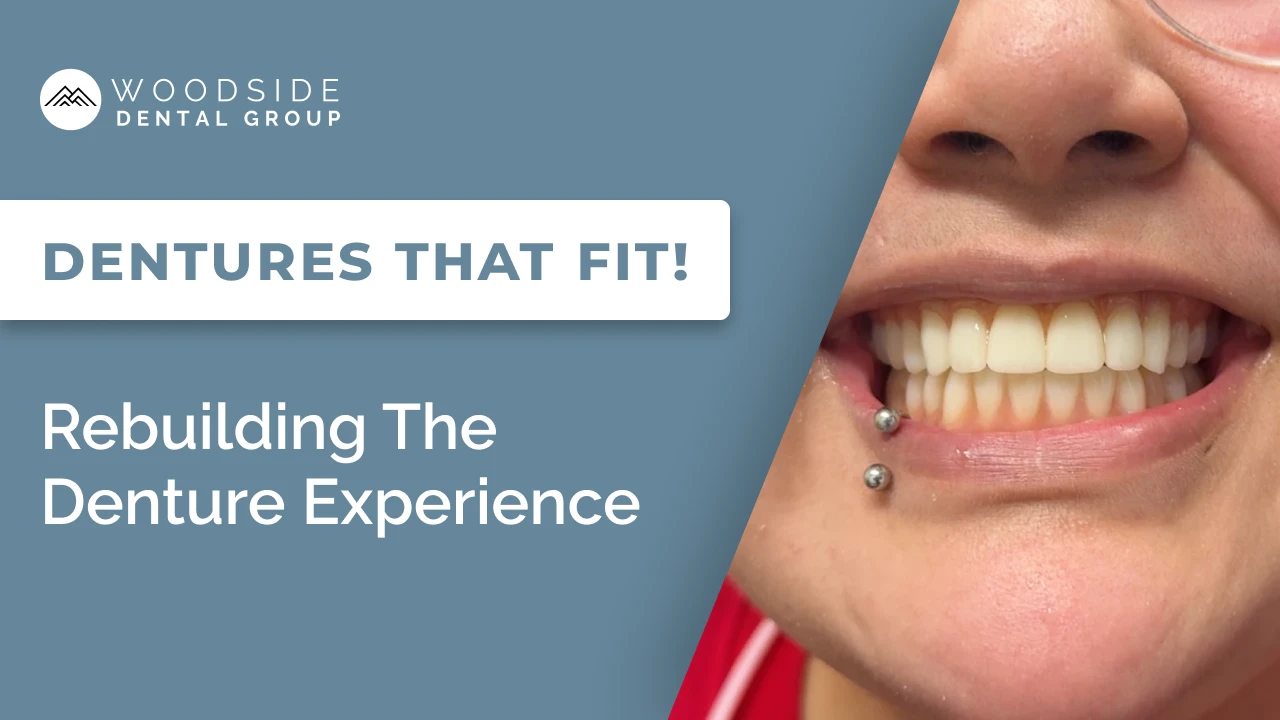
For a long time, we were frustrated. Patients would come to us hoping dentures would restore their confidence, their ability to eat, their smile — and too often, the traditional process let them down.
The truth about conventional denture fabrication is uncomfortable: the best outcomes were always deeply technique-sensitive, typically reserved for specialists charging fees completely out of reach for the patients who needed help the most. And the old saying in our industry exists for a reason — garbage in, garbage out.
So we made a decision: either transform the denture experience at Woodside, or stop offering it entirely.
After a year of research, significant investment in technology, and — most importantly — patients who believed in us through the trial and error, we built something we're genuinely proud to offer.
Stop letting tooth loss rob you of your confidence and health–schedule your dentures consultation today by calling our Woodside Dental Group team at (907) 333-1211.
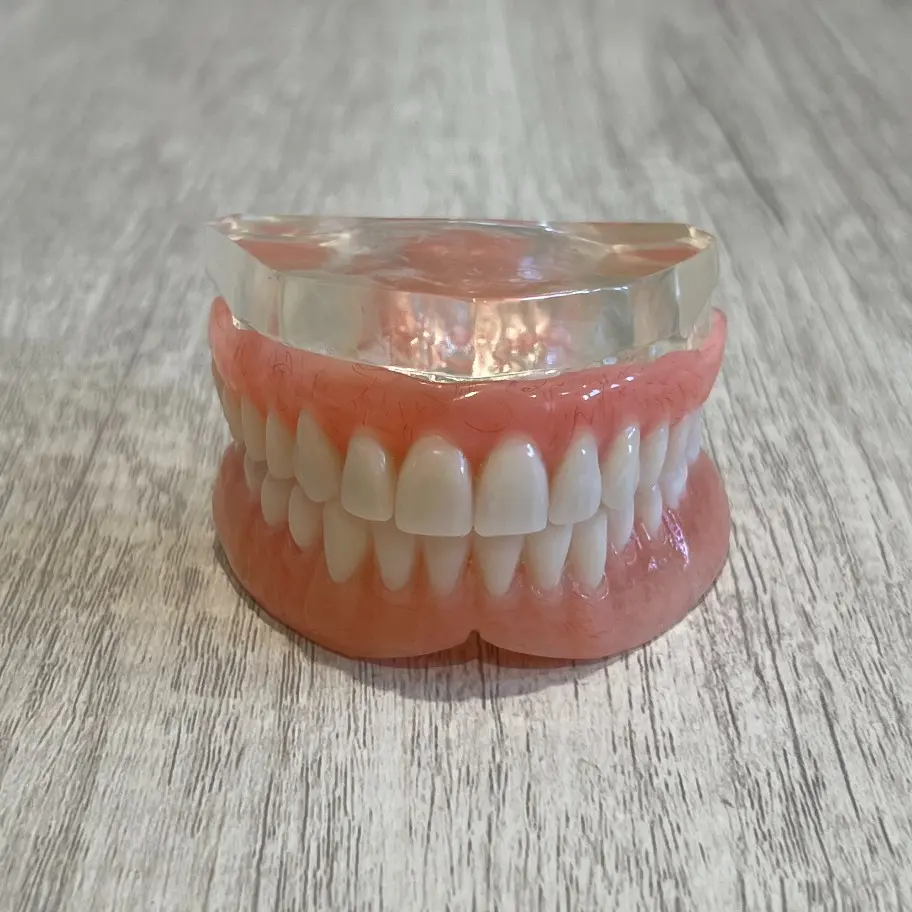
Made after your gums have fully healed, traditional dentures are fabricated using our complete digital workflow — scanned, designed in ExoCad, and 3D-printed for a fit that sets a new standard for what a conventional denture can feel like.
Placed the same day your teeth are removed so you’re never without a smile. These require adjustments as your tissue heals over the following months, and we factor that into your care plan from day one.
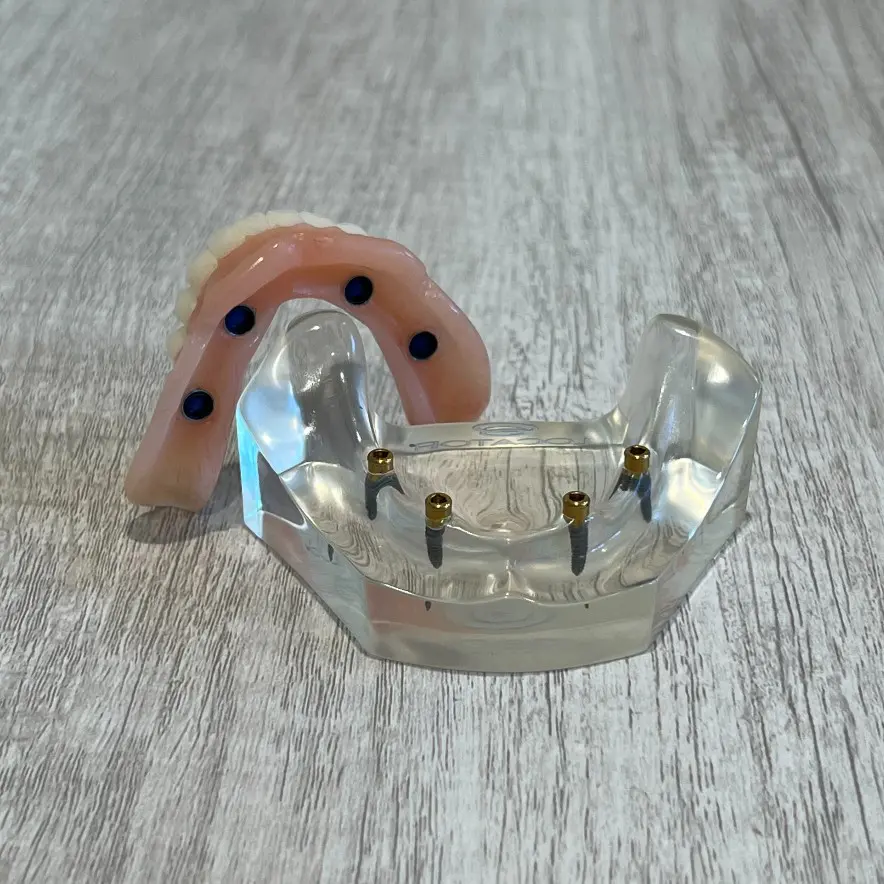
Snap-In Dentures (also called Click-In Dentures or Overdentures) are a cost-effective alternative to traditional dentures that utilizes strategically placed implants for added retention. Snap-In Dentures are removable by the patient for easy cleaning, but offer superior stability when compared to conventional dentures. We do not recommend snap-in dentures for the upper denture due to the soft bone and forces applied to the implants when removing the denture. Snap-In Dentures can help to increase your confidence, comfort, and function, thereby greatly increasing your quality of life.
When you still have healthy natural teeth worth keeping, a partial fills the gaps without touching what’s already working — designed to blend naturally with your existing smile. Partial dentures can help keep your other teeth from shifting, allow you to speak and eat better, and help support your cheeks and lips so your face does not appear older and sunken in.
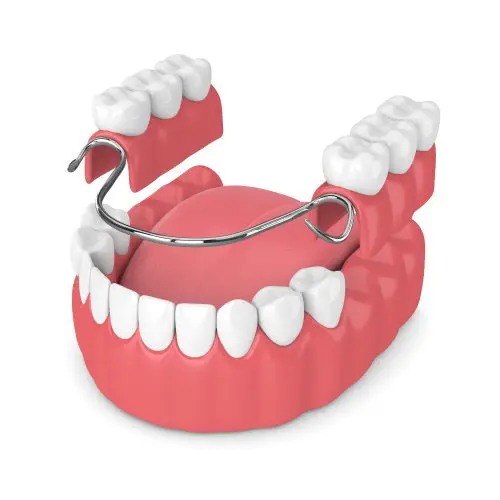
Cast Metal Partial Dentures slide over your existing teeth to help fill any gaps you may have. They are custom-made by expertly trained technicians, fit securely in place, and are very durable.
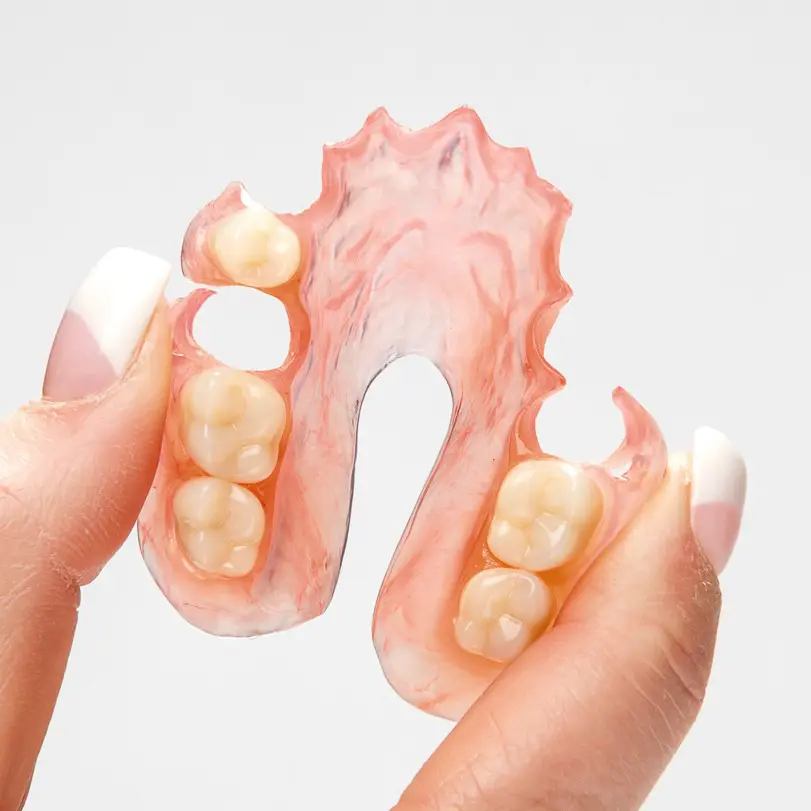
Flexible Base Partial Dentures (also called Valplast partials) use a state-of-the-art technology to create a lightweight, metal-free partial denture. Each appliance is handcrafted to help ensure a natural look and feel with increased flexibility and comfort.
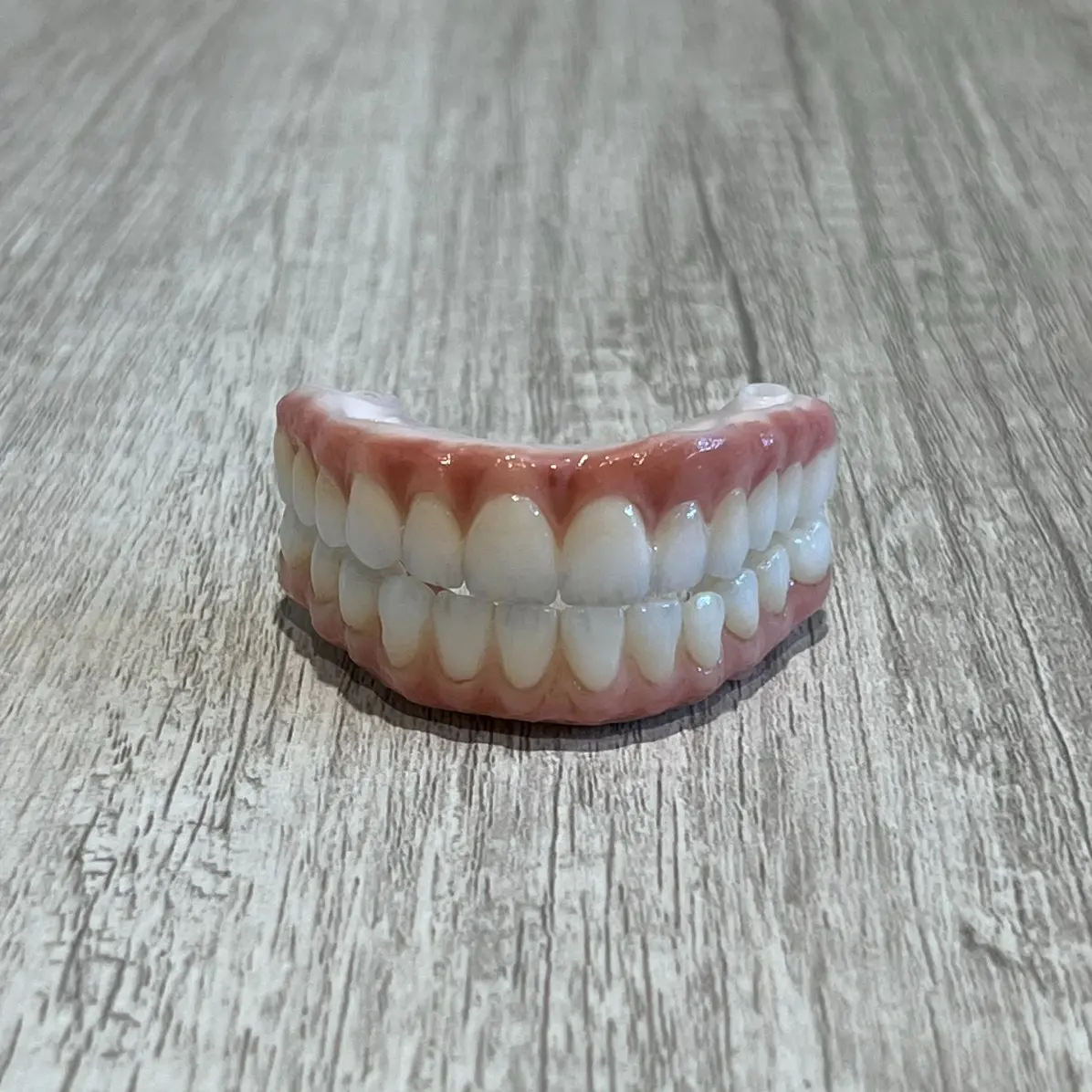
It can often be difficult to eat certain foods with a traditional denture. Permanent “Teeth in a day” utilizing dental implants can help make your dentures more stable so you can function better and have increased confidence. Permanent “Teeth in a day” uses 4-6 angled implants to place an entire arch of non-removable teeth in just one day!
Due to the advancements made in dental implant technology, permanent “teeth in a day” is more affordable than ever. And unlike many other teeth replacement options utilizing implants, with permanent “teeth in a day” you leave that same day with fixed teeth.
Even with the best technology and the most skilled team, traditional dentures have real anatomical limits. Bone loss, tissue changes, and jaw anatomy vary enormously from patient to patient — and some patients simply won’t achieve the stability or confidence they’re hoping for with a removable denture alone, no matter who makes it.
We’ll tell you that before you invest, not after.
That’s exactly why we offer implant-supported options — and why we use the same digital workflow and materials across all of them. Whether you’re a candidate for a conventional denture or ready to explore implants, the conversation starts the same way: honestly, and without pressure.
Dentures are removable prosthetic devices that are used to replace missing teeth and surrounding tissues. They can be used to replace all the teeth in the upper or lower jaw (complete dentures) or only a few missing teeth (partial dentures).
The process of getting dentures typically involves a couple appointments to take impressions of your mouth, make models of your teeth, and create the final dentures. Dr. Green will also work with you to select the size, shape, and color of your denture teeth to ensure a natural-looking and comfortable fit.
After the dentures are placed, you may experience some discomfort or difficulty speaking and eating, but these issues typically resolve with time and practice. It’s important to follow Dr. Green’s instructions for cleaning and caring for your dentures to maintain their function and appearance.
Yes, there are several different types of dentures available, and the best type of dentures for you will depend on your individual needs and preferences.
Here are some of the most common types of dentures:
The best type of dentures for you will depend on factors such as the number and location of missing teeth, your oral health, your budget, and your personal preferences. Dr. Green can help you determine the best type of dentures for your individual needs and circumstances. We will also discuss the pros and cons of each type of denture to help you make an informed decision.
The lifespan of dentures can vary depending on a few factors, such as the type of dentures, how well they are cared for, and changes in the mouth over time. In general, dentures should be replaced every 5 to 10 years.
Over time, dentures can become worn, stained, or misaligned, which can cause discomfort and difficulty with eating and speaking. Additionally, as the mouth changes due to bone loss, the fit of the dentures can become loose, which can also cause discomfort and make it difficult to chew and speak properly.
It’s important to have regular check-ups with a denturist to ensure that your dentures are fitting properly and to address any issues that may arise. If you’re experiencing discomfort or difficulty with your dentures, give Woodside Dental Group a call or schedule an appointment online today and we’ll get you in right away!
The cost of traditional dentures can vary depending on a few factors, such as the type of dentures, the materials used, and any additional services that may be required. In general, the cost of a set of traditional dentures can range from $1,000 to $3,000 per arch (upper or lower).
The cost of dentures may not be covered by insurance, or may only be partially covered. We recommend that you check with your specific insurance provider to see if you have coverage for dentures. At Woodside Dental Group, we offer financing options which spread out your payments and help fit dentures into your budget.
A partial denture is a removable dental appliance used to replace one or more missing teeth. It typically consists of replacement teeth attached to a pink or gum-colored plastic base, which is supported by metal clasps that attach to the remaining natural teeth.
Partial dentures stay in place through a combination of the clasps, which grip onto the natural teeth on either side of the gap, and the base material, which rests against the gums and other soft tissues in the mouth. The clasps are designed to be flexible enough to allow the partial denture to be easily removed for cleaning and maintenance, but strong enough to provide a secure fit during normal use.
Proper care and maintenance of your partial denture is important for ensuring its longevity and effectiveness. You should follow Dr. Green’s instructions for cleaning and storing your partial denture, and have it professionally checked and adjusted as needed to maintain a proper fit and function.
The cost of partial dentures can vary depending on several factors, such as the type of partial denture, the materials used, the complexity of the case, and any additional services that may be required.
In general, the cost of a partial denture can range from a few hundred to a few thousand dollars, depending on the factors mentioned above. The cost may be higher if the partial denture requires more specialized materials or a more complex design.
The cost of dentures may not be covered by insurance, or may only be partially covered. We recommend that you check with your specific insurance provider to see if you have coverage for dentures. At Woodside Dental Group, we offer financing options which spread out your payments and help fit partial dentures into your budget.
Yes, you can eat with partial dentures. Partial dentures are designed to replace missing teeth and restore your ability to chew and eat comfortably.
However, there may be some limitations to what you can eat with partial dentures. It’s important to avoid hard or sticky foods that could damage or dislodge the denture, such as hard candy, nuts, popcorn, and chewing gum. Instead, it’s best to stick to softer foods that are easier to chew, such as cooked vegetables, soft fruits, and well-cooked meats.
If you experience any discomfort or difficulty while eating with your partial denture, give Woodside Dental Group a call today and we can have your denture adjusted or replaced if necessary.
While it’s possible to sleep with partial dentures in, it’s generally not recommended. It’s important to remove your partial dentures at night and give your gums and remaining teeth a chance to rest.
Wearing your partial dentures for extended periods, such as overnight, can lead to irritation, soreness, and even infection of the gums. It can also cause damage to the denture or remaining teeth, as well as increase the risk of plaque and bacterial buildup.
It’s recommended that you remove your partial dentures before going to bed and store them in a clean, dry place. You can soak them in a denture cleaning solution overnight to help keep them clean and fresh.
Yes, temporary dentures are designed to allow you to eat and speak during the transition period while your permanent dentures are being made. However, there are some limitations to what you can eat with temporary dentures.
Temporary dentures are typically made of acrylic, which is not as strong as the materials used for permanent dentures. Therefore, it’s important to avoid hard or sticky foods that could damage or dislodge the temporary dentures. Some examples of foods to avoid include hard candy, nuts, popcorn, and chewing gum.
Instead, it’s best to stick to softer foods that are easier to chew, such as cooked vegetables, soft fruits, and well-cooked meats. You may also want to cut your food into smaller pieces and chew on both sides of your mouth to distribute the pressure more evenly.
It’s important to follow any specific instructions provided by Dr. Green regarding caring for and using your temporary dentures while you wait for your permanent dentures to be made.
Temporary dentures are designed to be a short-term solution while your permanent dentures are being made. The lifespan of temporary dentures can vary depending on a few factors, such as the type of denture, how well they are cared for, and how long they need to be worn.
In general, temporary dentures can last anywhere from a few weeks to a few months. They are not meant to be a permanent solution and are not as durable as permanent dentures. Over time, temporary dentures may become loose or uncomfortable as the gums and bone heal and change shape following tooth extraction.
It’s important to follow any specific instructions provided by Dr. Green regarding caring for and using your temporary dentures while you wait for your permanent dentures to be made. This can help ensure that they last as long as possible and that your transition to permanent dentures is as smooth and comfortable as possible.